
Archived NAB analysis covers declining capacity utilisation and capital spending, preserving context for business planning and informed decisions.
Tech changes are more than skin deep - NAB

13 September 2023
Health
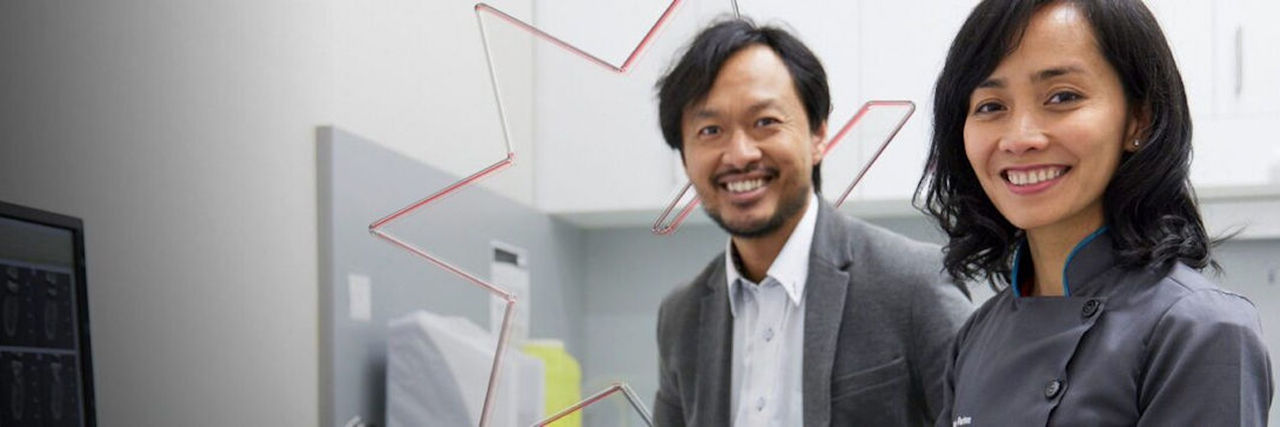
Australia has just 600 dermatologists and with only 20 new specialists graduating a year, there are not enough to service the population, especially in a sunny country with high skin cancer rates.
It’s a problem that Dr Philip Tong started thinking about when he was studying dermatology and one he is now trying to address with the use of technology at his start-up Dermscreen, which checks for skin cancers.
The company has developed photographic hardware to capture an image of 95 per cent of a patient’s body. It then uses a digital health platform to securely transmit the image and associated metadata such as the patient’s sun history to a dermatologist employed by Dermscreen, who then reviews the image.
The patient’s doctor receives a report using a traffic light system, with red for something that needs immediate attention, amber for something that requires monitoring and green for all clear.
In doing so, the technology overcomes several problems.
The first is the shortage of dermatologists, who cannot meet demand for appointments. The Dermscreen report essentially triages skin cancer patients, sorting those who need a biopsy or specialist treatment from those who don’t, Tong says.
It allows dermatologists who do the report on the image to work from home or a remote location, thereby increasing usage of the specialist practitioners.
The service also allows patients to have their moles examined promptly, rather than suffering the anxiety of a long wait for a dermatologist appointment. And because their moles are being examined by specialists, they are less likely to have unnecessary mole removals.
“This is very much a service that we provide to healthcare professionals so that they can better look after their patients,” Tong says.

“It compresses the entire patient journey if something is suspicious.”
The Sydney-based dermatologist says there’s no reason why the company can’t export the technology and have a global impact on the way dermatology services are accessed.
Dermscreen is just one example of how technology is being used to help the health system cope with limited resources and a growing need as the population ages and to help provide a better patient experience.
“Scarce labour resources is the sort of thing that’s driving the profession to think more about alternative ways of serving their patients,” says Andrew Loveridge, customer executive, NAB Health and Medfin.
“And digital definitely will be an enabler in terms of creating a better capacity for that profession.”

Uses range from the booking appointments and receiving prescriptions via text to health professionals conducting pre-screens of a patient prior to an appointment, which might reveal that a patient can be treated by a nurse instead of seeing a doctor.
And doctors can be pre-briefed with information about why a patient is coming to see them, which will make for more meaningful consultations.
The way that the COVID lockdowns drove so much service delivery to online models has had a lasting impact on healthcare and consumer expectations.
“Through COVID, the number of appointments or consultations done via the phone or Zoom or hybrid‑wise was phenomenal. So medical professionals have seen this thing work and obviously see that as definitely another channel to service their patient base,” Loveridge says.
“We’re seeing more and more using the platforms and the tools to improve that experience and adopt the same sort of experience that the consumer would have if they were wanting to buy a service of a different nature.”

Your Discount Chemist was one of the first businesses to take up the opportunity with NAB.
“It took a while to develop a product within the regulatory environment that worked for the bank, the Shariah advisers and our customers,” explains Dr Imran Lum, NAB’s Head of Islamic Finance. “We finally settled on commercial property financing for acquisition and construction via an ijarah muntahia bit-tamleek, a type of lease-to-own structure.”
Dr Lum adds that NAB has been a specialist in pharmacy banking for decades. “It always means a lot to us to see our customers innovate and grow,” he says. “It’s great to know we’re playing a part in their continuing success.”
For Fawaz and his brothers, building further on their success is at the heart of their strategy.
“We’re always looking for ways to innovate, and that means we’re constantly investing in the business,” Fawaz says.

“Healthcare is a very personal thing and so people will want to definitely interact with a human being. But I think there will be a much smoother way in terms of booking, accessibility and proximity.”
Special Report: Health Sector